How Much More Would You Pay for a Big Mac if McD Wages Were Increased to $15/hr? archived

Jul 30, 2013 at 8:32pm


Jul 30, 2013 at 8:46pm Edited
What do the highly committed and hardworking $7.25/hour workers who work 40 hours per week, and *never take a vacation day or a sick day*, earn in a year? A whopping $15K.
How do you afford the "further education" that is touted above when you only earn $15K/year???!!
And is the CEO working 600 times harder than all these highly committed minimum-wage earners who never take a vacation day or sick day? Because that's how many times higher his salary is.... even when he's on vacation, and his workers are at work.
Try this for economics (although I'm not sure @RealityForAll will even understand it):
http://beingliberal.upworthy.com/9-out-of-10-americans-are-completely-wrong-about-this-mind-blowing-fact-3
How do you afford the "further education" that is touted above when you only earn $15K/year???!!
And is the CEO working 600 times harder than all these highly committed minimum-wage earners who never take a vacation day or sick day? Because that's how many times higher his salary is.... even when he's on vacation, and his workers are at work.
Try this for economics (although I'm not sure @RealityForAll will even understand it):
http://beingliberal.upworthy.com/9-out-of-10-americans-are-completely-wrong-about-this-mind-blowing-fact-3
sprout said:
What do the highly committed and hardworking $7.25/hour workers who work 40 hours per week, and *never take a vacation day or a sick day*, earn in a year? A whopping $15K.
How do you afford the "further education" that is touted above when you only earn $15K/year???!!
And is the CEO working 600 times harder than all these highly committed minimum-wage earners who never take a vacation day or sick day? Because that's how many times higher his salary is.... even when he's on vacation, and his workers are at work.
Try this for economics (although I'm not sure @RealityForAll will even understand it):
http://beingliberal.upworthy.com/9-out-of-10-americans-are-completely-wrong-about-this-mind-blowing-fact-3
I believe the salary of McD's CEO is less than one million dollars ("$1,000.000"). The rest of the comp package I believe is incentive based stock options which are usually worthless unless certain stock price targets are met. McD MinWageEarners are not directly responsible for maintaining stock price for the owners ( the shareholders). Hence the comparison of the McD total CEO comp package to the wages of McD MinWageEarners seems to be a classic apple to orange comparison.
In Sprout's posting, the web link that Sprout posted addresses wealth distribution rather than the issue presented. Inserting wealth distribution into this discussion of minimum wage increases appears to be an attempt to derail this discussion. It would greatly appreciated if Sprout would address the issue presented: how much more would you pay for a Big Mac (assuming that you would purchase a Big Mac) if the McD current MinWageEarners wages were raised to $15/hour?
Does anyone see any drawbacks to raising wages for McD MinWageEarners to $15/hour?


I have it on the highest authority that they have good oatmeal.


Damn right they do!
Just make sure to order it sans creamer and sweetener...
Just make sure to order it sans creamer and sweetener...

Everything else has to be closed for me to eat anything at McDonald's. Fortunately, I'm never in that situation.


Jul 31, 2013 at 1:42am Edited
Northfield ave west orange, at the end of vauxhall road by the parkway, on the corner of michigan ave and route 22, pretty sure there are 1 or 2 in newark. Route 10 in east hanover.

I am not ashamed of the fact that I adore McDonalds and eat there about 4 times a year - usually rest stops on Rt 95. I ate my first Big Mac in 1976 (I think) during some Olympic promotion. I am fascinated by how McDonalds varies their recipes and menu offerings in different locals - you could say I am a McD's Nerd. Our local McDs in Mass had a McLobster Roll in the summers. Every country I visit I visit a McDonalds. Before my trip I Google to find out what is different in that countries menu (Germans love the McRib).
How much would I pay for a Big Mac? $6
How much would I pay for a Big Mac? $6

I wouldn't pay more. I prefer Burger King.
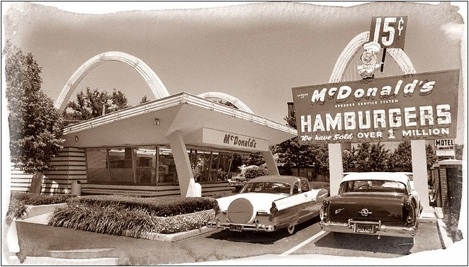
I worked at one that had the yellow arches over the building when I was 16.
I worked at one that had the yellow arches over the building when I was 16.

Oldstone said:
I wouldn't pay more. I prefer Burger King.
I worked at one that had the yellow arches over the building when I was 16.
That wasn't the store in South Park, Pa, was it?

Point 3 from the OP is clearly refuted in the student's analysis.
Quoted from above......
3.) A doubling of wages for the lowest earning people in the McD hierarchy (the "MinWageEarners") would cause wage compression. Those persons currently earning fifteen dollars or more per hour at McD ("Skilled McD Workers") would be discontent if unskilled labor/MinWageEarners are now earning what Skilled McD Workers earn.
*- Alternatively, the wages of the Skilled McD Workers could also be increased dramatically in order to keep pace with the increase for the MinWageEarners. However, these increase do not appear to be included in the 17% increase projection.
--------------
From the Huffington Post via NYT. As quoted by the OP
Doubling the salaries and benefits of all McDonald’s employees — from workers earning the federal minimum wage of $7.25 per hour to C.E.O. Donald Thompson, whose 2012 compensation totaled $8.75 million — would cause the price of a Big Mac to increase just 68 cents, from $3.99 to $4.67.
That’s if the company keeps profits and expenses the same. Sixty-eight cents, and even the C.E.O. gets a raise.
--------------
Quoted from above......
3.) A doubling of wages for the lowest earning people in the McD hierarchy (the "MinWageEarners") would cause wage compression. Those persons currently earning fifteen dollars or more per hour at McD ("Skilled McD Workers") would be discontent if unskilled labor/MinWageEarners are now earning what Skilled McD Workers earn.
*- Alternatively, the wages of the Skilled McD Workers could also be increased dramatically in order to keep pace with the increase for the MinWageEarners. However, these increase do not appear to be included in the 17% increase projection.
--------------
From the Huffington Post via NYT. As quoted by the OP
Doubling the salaries and benefits of all McDonald’s employees — from workers earning the federal minimum wage of $7.25 per hour to C.E.O. Donald Thompson, whose 2012 compensation totaled $8.75 million — would cause the price of a Big Mac to increase just 68 cents, from $3.99 to $4.67.
That’s if the company keeps profits and expenses the same. Sixty-eight cents, and even the C.E.O. gets a raise.
--------------
If someone gets paid $15/hr to screw up my order and not put cheese on my spicy chicken sandwich, every single time i order it , at wendy's (and not just at 1 wendys) then I should be making $1500/hour.
Jul 31, 2013 at 2:28am Edited
A successful movement to improve wages on the low end would likely spread to other fast food chains, and then other employers. This would drive wage based inflation in the economy. Prices would go up on all goods, across all segments. Industries that compete with competitors in low wage countries, would likely lose market share and many would fail, or move their operations overseas. The result would be a loss of jobs, both due to the inability of employers to afford the higher wages, and the inability to compete with low cost providers. On a macro-level, the balance of higher wages, with lower employment needs to be weighed to determine what is best, for the country.
We live in both a Macro and a Micro Economy, so while the benefit might outweigh the economic drag, real people we know, could lose their jobs. Job loss could send us back towards recession, while increased wages could help the overall economy.
We live in both a Macro and a Micro Economy, so while the benefit might outweigh the economic drag, real people we know, could lose their jobs. Job loss could send us back towards recession, while increased wages could help the overall economy.
algebra2 said:
I am not ashamed of the fact that I adore McDonalds and eat there about 4 times a year - usually rest stops on Rt 95. I ate my first Big Mac in 1976 (I think) during some Olympic promotion. I am fascinated by how McDonalds varies their recipes and menu offerings in different locals - you could say I am a McD's Nerd. Our local McDs in Mass had a McLobster Roll in the summers. Every country I visit I visit a McDonalds. Before my trip I Google to find out what is different in that countries menu (Germans love the McRib).
How much would I pay for a Big Mac? $6
Welcome back!
Just so I'm clear, there are people who think McDonald's could increase prices 17% and not suffer a loss in sales volume?


Jul 31, 2013 at 2:39am Edited
The closest one I know about is the rest stop on the Parkway, which you can access from Vauxhall road (no toll or parkway travel required.) Just take Vauxhall road southeast from Springfield Ave, cross over the GSP and take the left turn into the McD's. You can come back the same way. (Or, even quicker but more turns, take Burnet to Stanley (left turn) to Stuyvesant (right turn) to Vauxhall (left turn). When my kids were little, we sometimes took them there to play on the playset. I think we also had a birthday party there once.RobB said:
I still don't know where there's a McDonalds around here.
I don't know for sure, but there are a lot of people like me who would consider going there MORE if we knew that they had doubled their workers wages. Based on a couple of encounters during a recent vacation, I find that McD's is better than it used to be, actually.RobB said:
Just so I'm clear, there are people who think McDonald's could increase prices 17% and not suffer a loss in sales volume?
If it were possible for them to use cheaper ingredients, they'd be using them already. No need to push.

pcg said:
A successful movement to improve wages on the low end would likely spread to other fast food chains, and then other employers. This would drive wage based inflation in the economy. Prices would go up on all goods, across all segments. Industries that compete with competitors in low wage countries, would likely lose market share and many would fail, or move their operations overseas. The result would be a loss of jobs, both due to the inability of employers to afford the higher wages, and the inability to compete with low cost providers. On a macro-level, the balance of higher wages, with lower employment needs to be weighed to determine what is best, for the country.
We live in both a Macro and a Micro Economy, so while the benefit might outweigh the economic drag, real people we know, could lose their jobs. Job loss could send us back towards recession, while increased wages could help the overall economy.
So, I guess fast food workers have to take one for the team, hey?
RobB said:
Just so I'm clear, there are people who think McDonald's could increase prices 17% and not suffer a loss in sales volume?
It depends on many factors.
If other fast food retailers have to deal with the same wage cost issues, the McD might not be the only one with higher prices. If the entire supply chain has higher prices, then demand may decrease across the macro, but market share could remain consistent.
If a large segment of the fast food buying public sees a significant raise in income, demand may increase across all retailers. This may drive up demand.
If McD increases salaries, people might view them as a benevolent employer and might frequent them more often. Again, driving up demand.
Weigh these together, with other market factors, and the impact of a price rise will be clear.
If they made the "super sizes" a bit smaller, would anyone notice?
My point is that saying an increase in wages inevitably leads to a direct increase in prices suggests a lack of imagination for where else costs could be cut. Also, I don't believe most McDs employees actually work for the bigger corporation anyway. Aren't most of the stores franchises?
My point is that saying an increase in wages inevitably leads to a direct increase in prices suggests a lack of imagination for where else costs could be cut. Also, I don't believe most McDs employees actually work for the bigger corporation anyway. Aren't most of the stores franchises?
Jul 31, 2013 at 2:49am Edited
ml1 said:
My point is that saying an increase in wages inevitably leads to a direct increase in prices suggests a lack of imagination for where else costs could be cut.
If they could cut other costs, it would be done already. It is unlikely they could cut more than a percent or two from their costs.
ml1 said:
Also, I don't believe most McDs employees actually work for the bigger corporation anyway. Aren't most of the stores franchises?
Agreed. And we don't know if the original analysis took into account those workers, and the possible increase in benefits and taxes McD would have to pay as a result of increasing salaries. (FICA, 401K matches, etc).
If there's a corner that could be cut without hurting sales, they'd have cut it already. You think they're leaving money on the table?ml1 said:
If they made the "super sizes" a bit smaller, would anyone notice?
The actual product cost in a trough of french fries is probably a nickel.
Does market share matter if they're selling fewer cheeseburgers?pcg said:
RobB said:
Just so I'm clear, there are people who think McDonald's could increase prices 17% and not suffer a loss in sales volume?
It depends on many factors.
If other fast food retailers have to deal with the same wage cost issues, the McD might not be the only one with higher prices. If the entire supply chain has higher prices, then demand may decrease across the macro, but market share could remain consistent.
If a large segment of the fast food buying public sees a significant raise in income, demand may increase across all retailers. This may drive up demand.
If McD increases salaries, people might view them as a benevolent employer and might frequent them more often. Again, driving up demand.
I don't buy the "more people would eat there if they paid a living wage" argument. You ever eat breakfast in a McD's? Table after table of old folks on a first name basis with the workers. Even if some people would increase from zero to 12 annual McD's trips, it would take a lot to replace the lost 7x per week customers.
pcg said:
ml1 said:
My point is that saying an increase in wages inevitably leads to a direct increase in prices suggests a lack of imagination for where else costs could be cut.
If they could cut other costs, it would be done already. It is unlikely they old cut more than a percent or two from their costs.
Interesting that no one even mentions that McDs could cut executive bonuses. Likely the world wouldn't come to an end.
Or they could stop stock buybacks
http://www.aboutmcdonalds.com/mcd/investors/stock_information/share_repurchases.html
http://www.aboutmcdonalds.com/mcd/investors/stock_information/share_repurchases.html
It's the executives who found all those corners in the first place. Though I suppose now that they're found, Ronald could probably send them packing.
I think you're right about the franchise thing though. I hope that poor undergrad took it into account or he's getting tarred and feathered.
I think you're right about the franchise thing though. I hope that poor undergrad took it into account or he's getting tarred and feathered.
When the recession hit, one year my company told executives there would be no raises, but there would be a few percent raise to everyone below the exec level. As far as I know no executives resigned. McDs could do the same for a year or two and I doubt they'd lose many employees.
Well, again, I don't think it would matter. Individual franchisees don't have lavish executive bonuses.

You can not reply as this discussion is Closed!
For Sale





Free Items
Sponsored Business





Promote your business here - Businesses get highlighted throughout the site and you can add a deal.
Advertisement



At first blush, this proposal and analysis appears faulty for a number of reasons as follows:
1.) The analysis of price increase in menu items versus increase in wages assumes that the demand for McD items will not diminish when the price for these items are increased.
*- demand for burgers, fries, etc is not inelastic; and
*- ready substitutes, such as Subway, are readily available.
2.) Price increases at McD would likely be utilized by competitors to diminish McD market share;
3.) A doubling of wages for the lowest earning people in the McD hierarchy (the "MinWageEarners") would cause wage compression. Those persons currently earning fifteen dollars or more per hour at McD ("Skilled McD Workers") would be discontent if unskilled labor/MinWageEarners are now earning what Skilled McD Workers earn.
*- Alternatively, the wages of the Skilled McD Workers could also be increased dramatically in order to keep pace with the increase for the MinWageEarners. However, these increase do not appear to be included in the 17% increase projection.
*- Raising the base wage to $15/hour would likely be a disincentive to many to bettering themselves and aspiring to further education and training.
4.) A better solution would be providing incentives to McD and their franchisees that would allow workers access to more hours.
For these reasons, the proposal of increasing McD MinWageEarners to $15/hour should be rejected.
==================================================
Reprint of NYT article set forth below:
See http://takingnote.blogs.nytimes.com/2013/07/30/how-much-would-you-pay-for-a-big-mac/#postComment
How Much Would You Pay for a Big Mac?
By JULIET LAPIDOS
Fast food workers in New York, Chicago, St. Louis and other cities are walking off their jobs this week to protest their low wages. They’re calling for $15 an hour plus the right to unionize without retaliation.
The hysterical response to the strikes probably goes something like this: Oh my god! We’re going to have to pay $1,000 for hamburgers!
But a student at the University of Kansas looked at McDonald’s 2012 annual report and found that the world’s largest burger chain, at least, could better compensate its employees without losing its reputation as a dirt cheap dining option.
The student, Arnobio Morelix, provided his calculations to The Huffington Post, which reported:
Doubling the salaries and benefits of all McDonald’s employees — from workers earning the federal minimum wage of $7.25 per hour to C.E.O. Donald Thompson, whose 2012 compensation totaled $8.75 million — would cause the price of a Big Mac to increase just 68 cents, from $3.99 to $4.67.
That’s if the company keeps profits and expenses the same. Sixty-eight cents, and even the C.E.O. gets a raise.
Mr. Morelix also found that the price of every item on the Dollar Menu would increase by 17 cents.
This post has been revised to reflect the following correction:
Correction: July 31, 2013
This post originally identified Arnobio Morelix as a research assistant at the University of Kansas. He is a student there.