Dog suddenly afraid of stairs -- any advice? archived

Jul 4, 2008 at 3:16am

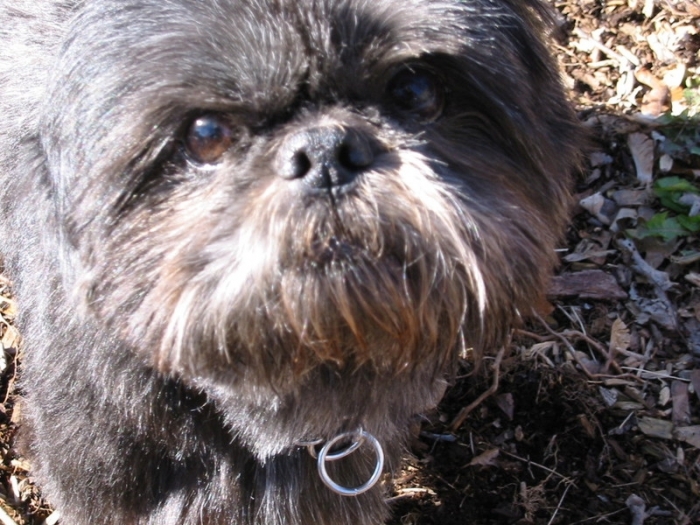
Oh Beppolina---your poor little monkey-face!
Was the blindness inhis eye due to an injury or disease? This sudden onset makes me think that his vision in his good eye may be deteriorating. Have him checkedout medically.
As a practical matter, do you think he would use a ramp to go up and down the stairs?
I think if you have him checked out medically and he is fine , then it is just a matter of re-training him. That may require some persistence and patience, but you should be able to accomplish that to help him over his phobia.
Get him examined first (Red Bank Animal Medical Center has a wonderful canine opthalmology Department.) and then we will deal with the re-training issues.
Good Luck---kiss that little licorice drop nose for me!
Calli
Was the blindness inhis eye due to an injury or disease? This sudden onset makes me think that his vision in his good eye may be deteriorating.
Have him checkedout medically.As a practical matter, do you think he would use a ramp to go up and down the stairs?
I think if you have him checked out medically and he is fine , then it is just a matter of re-training him. That may require some persistence and patience, but you should be able to accomplish that to help him over his phobia.
Get him examined first (Red Bank Animal Medical Center has a wonderful canine opthalmology Department.) and then we will deal with the re-training issues.
Good Luck---kiss that little licorice drop nose for me!
Calli

My mom's dog is totally blind and is old (poor thing) and will not go up or down steps anymore. He can't gauge anything and becomes freaked out. If he wants to go upstairs, my step dad carries him and when he's ready to go back down, you guessed it -- he carries him. It's a sad thing to see, but my step dad doesn't mind at all. He loves that dog like crazy. My mom on the other hand, not so much.

Beppolina,
I have a dog "Charlie" who is blind. He was 100% blind when we moved here to Maplewood and after about 2 years he began having difficulty with the wooden stairs. His problem is that he would start to slide and then would not be able to stop himself and would slide the entire way down the stairs....he never hurt himself to badly, but what a noise that made! We solve this dilema by putting carpet treads from Home Depot on each stair with non slip material underneath each one. Two years later he is still taking the stairs like a pro and isn't afraid of them.
I hope some carpet tread gives your dog some confidence back! If not, you might consider putting a baby gate at the bottom of the stairs and make upstairs off limits...
I have a dog "Charlie" who is blind. He was 100% blind when we moved here to Maplewood and after about 2 years he began having difficulty with the wooden stairs. His problem is that he would start to slide and then would not be able to stop himself and would slide the entire way down the stairs....he never hurt himself to badly, but what a noise that made! We solve this dilema by putting carpet treads from Home Depot on each stair with non slip material underneath each one. Two years later he is still taking the stairs like a pro and isn't afraid of them.
I hope some carpet tread gives your dog some confidence back! If not, you might consider putting a baby gate at the bottom of the stairs and make upstairs off limits...
My mom's stairs are carpeted and you're right, that does help a lot. But...when he was partially blind, he used the carpeting on the stairs to help guide him and hold him upright, but his body weight leaned against the walls. This drove my mom crazy because the oil from his fur after a while would dirty the walls and it was quite visible. She'd sit on the stairs with a bucked and cloth, washing down the walls.

Our dog also will not walk up and down stairs in our maplewood house because it is uncarpeted and she slipped down the entire flight the first week we were here : (. Poor boo-boo. We are getting a runner put in now, but for the last two years we've been carrying her up and down.

Slipping on uncarpeted stairs was my first thought when I read your posting. Carpet treads are a good solution if this is the case--also provides a helpful visual clue.
And, as a dog gets older it becomes more evident that dogs come down the steps sideways and if large, lean against one wall.
Hope it is not a vision problem, but having the dog checked by a vet might assist you in figuring out what the problem is.
And, as a dog gets older it becomes more evident that dogs come down the steps sideways and if large, lean against one wall.
Hope it is not a vision problem, but having the dog checked by a vet might assist you in figuring out what the problem is.
Oh, you guys are the best!
The stairs are carpeted, so he does get traction. Calliope, thanks for the recommendation for the Red Bank animal hospital. He has pigmentary keratitis in his left eye, most likely because his eyelashes or hair had grown into the cornea when he was neglected. He's been on daily cyclosporin eyedrops in that eye for a year or so, which has helped enormously -- no more goopy secretions, and the overall eye is much brighter and shinier.
I really do suspect it's behavioral at this point -- he also likes to stretch out and sleep on a stair (like a cat), and maybe toppled off when he woke and forgot where he was? -- But I'll definitely get the good eye checked out on Monday.
(And, Calli, he appreciates the kisses!)
The stairs are carpeted, so he does get traction. Calliope, thanks for the recommendation for the Red Bank animal hospital. He has pigmentary keratitis in his left eye, most likely because his eyelashes or hair had grown into the cornea when he was neglected. He's been on daily cyclosporin eyedrops in that eye for a year or so, which has helped enormously -- no more goopy secretions, and the overall eye is much brighter and shinier.
I really do suspect it's behavioral at this point -- he also likes to stretch out and sleep on a stair (like a cat), and maybe toppled off when he woke and forgot where he was? -- But I'll definitely get the good eye checked out on Monday.
(And, Calli, he appreciates the kisses!)
here's the monkey! this was taken two years ago; the left eye is much less cloudy now.


I had a dog who gradually went blind over a year-long period. During that time, I trained her to respond to voice prompts of "up" and "down". When we moved to Maplewood, she was completely blind, but learned the layout of our house and stairs and had no problems for a number of years. As she aged, arthritis kicked in and stairs did become difficult.
I'd first suggest you have your dog's eyesight checked to see if there's been a significant change; this could make the stairs look different or scary.
Then, have his gait and joints checked to make sure it hasn't become painful for him to go up and down the stairs.
If the eyes and joints check out OK, I'd suggest putting him on a leash and walking him up one or two stairs, with you right beside him, tempting him with whatever he finds is most delicious. My blind dog loved cheese; my current dog will do anything for chicken. See if you can get him to go up a few steps (not the whole flight) and then see if you can stretch it out a little bit.
How is your dog on outside/stone stairs? When my dog was a puppy, I taught him how to do stairs on the shallow, wide steps by Maplewood Town Hall (we'd go down on weekends) and they were very easy steps for him to learn on.
Good luck.
I'd first suggest you have your dog's eyesight checked to see if there's been a significant change; this could make the stairs look different or scary.
Then, have his gait and joints checked to make sure it hasn't become painful for him to go up and down the stairs.
If the eyes and joints check out OK, I'd suggest putting him on a leash and walking him up one or two stairs, with you right beside him, tempting him with whatever he finds is most delicious. My blind dog loved cheese; my current dog will do anything for chicken. See if you can get him to go up a few steps (not the whole flight) and then see if you can stretch it out a little bit.
How is your dog on outside/stone stairs? When my dog was a puppy, I taught him how to do stairs on the shallow, wide steps by Maplewood Town Hall (we'd go down on weekends) and they were very easy steps for him to learn on.
Good luck.
Thanks, Cody. Going up stairs is no problem. Only down.
He's never had trouble with outdoor steps, including our front steps. Indoor carpeted steps have varied widely -- he's mostly nervous, but only just in the last two weeks has he started refusing to go down a flight of carpeted stairs that had never been a problem before.
He's never had trouble with outdoor steps, including our front steps. Indoor carpeted steps have varied widely -- he's mostly nervous, but only just in the last two weeks has he started refusing to go down a flight of carpeted stairs that had never been a problem before.

Some kinds of carpeting can be slippery, so maybe it is a traction problem like some other posters suggested.
Oh my goodness, what a cutie!! That FACE!
I was going to suggest carpeting as well. Possibly check the toe nails... too long is painful, too short takes away their grip.
And the eye check. Red Bank Vet is tremendously helpful; the doctor there advised my vet on how to surgically treat one of my furries, and the operation was highly successful.
If not physical, I tend to think behavior, next in line for investigation. I would agree he possibly fell over, off a step while snoozing. That would be a scary event, especially for an older, partially blind dog.
You have some great suggestions already... so all I can add is my Best Wishes with your little monkey-face.
I was going to suggest carpeting as well. Possibly check the toe nails... too long is painful, too short takes away their grip.
And the eye check. Red Bank Vet is tremendously helpful; the doctor there advised my vet on how to surgically treat one of my furries, and the operation was highly successful.
If not physical, I tend to think behavior, next in line for investigation. I would agree he possibly fell over, off a step while snoozing. That would be a scary event, especially for an older, partially blind dog.
You have some great suggestions already... so all I can add is my Best Wishes with your little monkey-face.


OK. this is where understanding the way blindness looks from the other side helps. keratisis (sp) makes all your perspectives bulge out in weird ways, and shadows are spooky. He also has 'holes' in his vision (what's left) and possibly only sees through a teeny little dot of central vision (if I have the condition right). (Most blind people actually see something, even if it's light and/or shade). So he's lost the ability to see anything recognisable at a distance, and you're expecting him to handle angles, height and depth as well.
Light the area about the steps OR light the steps (perhaps the banister railing so he's not dazzled by them). You can get protector strips for walls and steps with which to line your steps so as he leans on them he won't affect your paintwork - these strips are made for people who use mobility aids, and for childcare places so there is bound to be at least one form that can be easily removed for cleaning. You didn't say how many steps or flights, or if they turn: consider have a lighter strip at the edge of each step (in non-slip paint or adhesive carpet or hazard marking - a hardware chain store should be able to help) so he can gauge each step ahead and can feel it. This will also help define how many more to go, and the angle of ascent or decent.
If his nose is still working, you could try scent marking (with something pleasant, of course) the edge of the steps and the wall sides. This helps him know the safe areas. Make sure you have soft matting (but not a trip hazard) at the foot of the steps.
And trust his instincts. Minnie (our kitty) has thick cataracts in both eyes and it's a wonder she sees anything at all - if she human I suspect she couldn't. Some days she just won't go near the front door or jump on the bed (normally safe places for her) because it's too bright for her; the glare is like hitting a solid wall. Even picking her up and placing her there is too traumatising. The obstacle is not what we see, it's what they can't. On those days, find a way to cope with his condition and keep him happy where he is. He'll be OK again when the ambient lighting returns to a more comfortable range.
Light the area about the steps OR light the steps (perhaps the banister railing so he's not dazzled by them). You can get protector strips for walls and steps with which to line your steps so as he leans on them he won't affect your paintwork - these strips are made for people who use mobility aids, and for childcare places so there is bound to be at least one form that can be easily removed for cleaning. You didn't say how many steps or flights, or if they turn: consider have a lighter strip at the edge of each step (in non-slip paint or adhesive carpet or hazard marking - a hardware chain store should be able to help) so he can gauge each step ahead and can feel it. This will also help define how many more to go, and the angle of ascent or decent.
If his nose is still working, you could try scent marking (with something pleasant, of course) the edge of the steps and the wall sides. This helps him know the safe areas. Make sure you have soft matting (but not a trip hazard) at the foot of the steps.
And trust his instincts. Minnie (our kitty) has thick cataracts in both eyes and it's a wonder she sees anything at all - if she human I suspect she couldn't. Some days she just won't go near the front door or jump on the bed (normally safe places for her) because it's too bright for her; the glare is like hitting a solid wall. Even picking her up and placing her there is too traumatising. The obstacle is not what we see, it's what they can't. On those days, find a way to cope with his condition and keep him happy where he is. He'll be OK again when the ambient lighting returns to a more comfortable range.
Joanne, that's very helpful! Thus far it's only one eye that's affected but we're going to the vet this week to see if there's anything going on in his other eye.
The staircase that suddenly scares him (until last week he had no problem with it) is indoors, carpeted, and straight. Calli, Critterlover, any additional behavioral suggestions would be most useful! (I can get him to go all the way down, one step at a time -- no flying leaps -- if I give him bits of cheese or pieces of a biscuit at each step. So he's probably reverse-training me into stuffing him with Parmesan every time he takes the stairs.........)
The staircase that suddenly scares him (until last week he had no problem with it) is indoors, carpeted, and straight. Calli, Critterlover, any additional behavioral suggestions would be most useful! (I can get him to go all the way down, one step at a time -- no flying leaps -- if I give him bits of cheese or pieces of a biscuit at each step. So he's probably reverse-training me into stuffing him with Parmesan every time he takes the stairs.........)
Is there a wall on each side of your steps or is it open on one side? If it's open on one side and your pup went up or down one day at a slight angle he may have tumbled off which could be the reason he is now afraid.
More props for the ophthalmology department at Red Bank Animal Medical Center, they are wonderful! Good luck!
More props for the ophthalmology department at Red Bank Animal Medical Center, they are wonderful! Good luck!
Being able to tempt him one step at a time is telling me it's is about how far he can see and still feel safe. You need some of the adaptations we'd for humans with a similar permanent condition, as listed above, plus work on training him to use the wall side for safety. We often paint hand-width contrast guide lines about six inches or so above the floor to help people with peripheral vision and balance issues, especially where there may be a hazard such as a change in surface height or texture. (Not only can they follow the path they know which is the fixed edge and which is the free or loose edge if they follow the line)
Fun exercise: get a pair of clear swim goggles. Smear outside the lenses with vaseline. Clear a tiny hole at the centre of the lens that represents his bad eye; about the size of a hole-puncher hole. Rub off most of the vaseline from the other lens but not completely. Now walk around your home and the top of your stairs. Now crawl around the top of your stairs and figure how how you're going to get down them.
If you note what you can see and what makes you feel safe, you're halfway to figuring out what will work for your friend.
Fun exercise: get a pair of clear swim goggles. Smear outside the lenses with vaseline. Clear a tiny hole at the centre of the lens that represents his bad eye; about the size of a hole-puncher hole. Rub off most of the vaseline from the other lens but not completely. Now walk around your home and the top of your stairs. Now crawl around the top of your stairs and figure how how you're going to get down them.
If you note what you can see and what makes you feel safe, you're halfway to figuring out what will work for your friend.
I may have missed it... but is there a reason he must go up and down these stairs?
He's lightweight, you can carry him if he feels secure in that... carry him outside for walks/pottying, then let him climb the steps to come back inside, maybe? Just a thought.
He's lightweight, you can carry him if he feels secure in that... carry him outside for walks/pottying, then let him climb the steps to come back inside, maybe? Just a thought.

You can not reply as this discussion is Closed!







We think he must have taken a tumble when we weren't home. (He's not in any physical pain, and is eating, playing, jumping, walking, etc. as he always did.) How can we get him to use the stairs again? We've tried coaxing him one step at a time with food -- but that never worked on the outside steps (which he absolutely refuses to go down by himself), and while it has some effect on the interior staircase, we're not always around to help him.
This is a small dog (18 pounds) so of course my first impulse is to just carry him everywhere -- but, again, when he's home alone we need him to be safe. And his "sister" scampers up and down the stairs with no problem -- closing off access to part of the house would be frustrating to her.
Thanks in advance for your advice!